Interest in obtaining Turkish citizenship continues among international investors, foreign property buyers and families with long-term connections to Türkiye. While investment thresholds often receive the most attention, legal professionals are increasingly emphasizing another critical part of the process: due diligence before the application is submitted.
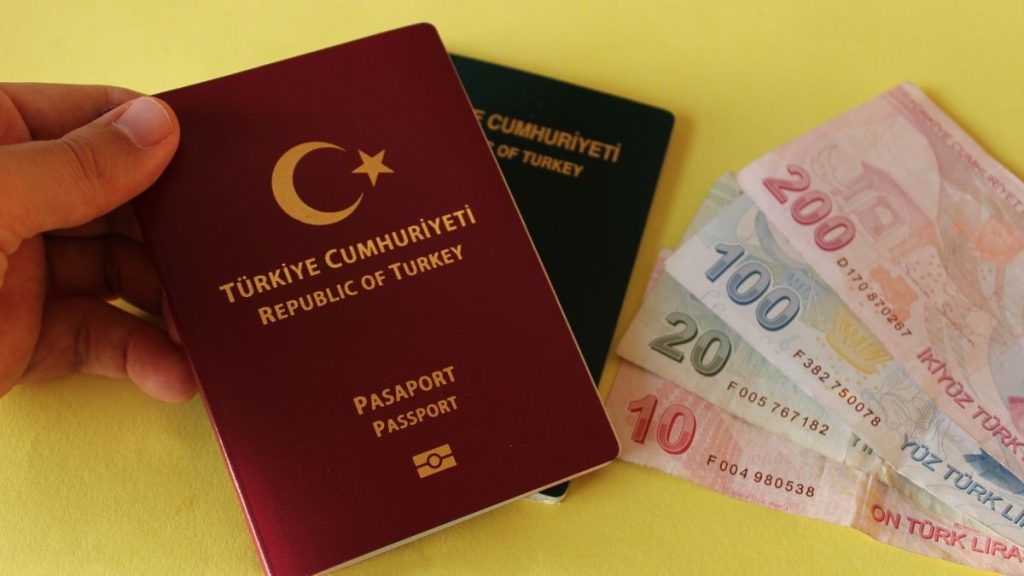
Turkish citizenship can be acquired through several different legal routes, including investment, marriage and long-term residence. Each route has separate eligibility conditions, documentary requirements and administrative stages. Applicants who focus only on the final citizenship application may overlook problems connected to the underlying investment, their civil records or their immigration status.
For this reason, the preliminary legal review has become one of the most important stages of a citizenship strategy.
Citizenship Is a Multi-Stage Legal Process
A common misconception is that Turkish citizenship is obtained through a single application. In practice, several connected procedures may need to be completed.
An investor using the real estate route must first select a qualifying property, complete the necessary valuation and payment procedures, register the acquisition at the land registry and obtain the required eligibility documentation. The applicant may then proceed through residence and citizenship application stages.
Other investment options have their own procedures and supervising authorities. These may include fixed capital investment, bank deposits, government bonds, investment fund participation, private pension contributions or employment creation.
Citizenship by marriage follows a different legal framework. Marriage to a Turkish citizen does not automatically provide citizenship. The foreign spouse must generally satisfy the required marriage period and demonstrate that the legal conditions are met.
Likewise, long-term residence in Türkiye does not by itself guarantee naturalization. The authorities may consider residence history, continuity, public order issues, documentation and other statutory conditions.
Working with a turkish citizenship lawyer can help an applicant identify the correct route, understand the stages involved and review whether the supporting documents are consistent before the formal process begins.
Tuva Law and Consultancy provides citizenship-related legal assistance from its Ankara office, including preliminary eligibility review, document assessment and coordination of connected legal procedures for international clients.
Property Selection Requires More Than a Price Check
The real estate investment route remains one of the most widely discussed methods of applying for Turkish citizenship. Under the current framework, a foreign investor may qualify by acquiring eligible real estate worth at least USD 400,000 and registering a commitment not to sell the property for at least three years.
However, meeting the advertised purchase price is not the only consideration.
Before proceeding, the buyer should examine the title deed, legal ownership, mortgages, liens, annotations and restrictions affecting the property. The transaction should also be reviewed for compliance with the specific rules applicable to citizenship-related acquisitions.
The identity and legal status of the seller may also be relevant. Payment records, valuation documents and land registry declarations must be prepared consistently. A transaction structured incorrectly at the beginning may be difficult or impossible to convert into a qualifying citizenship investment later.
Foreign buyers should therefore distinguish between ordinary property acquisition and property acquisition specifically structured for a citizenship application.
Document Consistency Can Affect the Entire Application
Citizenship applications usually require documents issued by more than one country. These may include passports, birth certificates, marriage records, criminal record certificates and documents relating to children or previous marriages.
Names, dates and places of birth should appear consistently across the file. Transliteration differences can create complications when a person’s name is written differently in various alphabets or official records.
Foreign documents may also need an apostille or consular legalization, followed by sworn translation and notarization in Türkiye. The correct legalization route depends on the country that issued the document and the international agreements in force.
Applicants should not assume that a document accepted for a visa, bank account or property transaction will automatically satisfy the requirements of a citizenship application. Different public authorities may examine documents for different legal purposes.
A preliminary document review can identify discrepancies before translations, notarizations and formal submissions generate additional expense.
Family Members Require Separate Assessment
Many citizenship applicants intend to include a spouse and dependent children. However, the principal investor’s eligibility does not eliminate the need to review each family member’s documentation.
Marriage records must be valid and properly documented. Birth certificates must clearly establish the relationship between parents and children. Custody or consent documents may be necessary in some circumstances, particularly where a child’s parents are divorced, one parent is not applying or family records contain inconsistencies.
Adult children are not treated in the same way as dependent minors under every citizenship route. Applicants should therefore determine at an early stage which family members may be included and which individuals may need a separate legal basis.
This assessment is especially important for families with documents issued in multiple jurisdictions.
Immigration Status Should Not Be Ignored
Citizenship, residence and immigration are connected but legally distinct matters.
An applicant may need a residence permit during the investment-based citizenship process. Existing entry restrictions, deportation decisions, overstays or inconsistencies in immigration records may also require separate examination.
Applicants should disclose previous immigration problems at the beginning of the legal review. Attempting to proceed without evaluating these matters may cause delays or create additional questions during the administrative assessment.
The existence of an investment does not automatically remove unrelated immigration or public order concerns.
Legal Assistance Should Focus on Risk, Not Guarantees
No legal professional should promise that a citizenship application will be approved. Citizenship decisions remain subject to statutory requirements, administrative review and the authority of the relevant government bodies.
The proper role of legal assistance is to explain the applicable framework, identify risks, prepare documents carefully and help the applicant complete the required procedures in the correct order.
Applicants should also be cautious of offers that advertise guaranteed passports, unusually short approval periods or property purchases presented as automatically qualifying for citizenship.
Reliable advice should distinguish between meeting an investment threshold and receiving a final citizenship decision.
Preparation Remains the Most Effective Strategy
The Turkish citizenship process can be manageable when the correct route is selected and each stage is properly coordinated. Problems are more likely to arise when an investment is completed before legal eligibility is reviewed or when documents are prepared without checking their consistency.
A structured process should begin with an assessment of the applicant and family members, followed by a review of the proposed citizenship route. The investment or underlying legal basis should then be examined before the formal application file is assembled.
As international interest in Türkiye continues, legal due diligence is likely to remain central to responsible citizenship planning. The investment may open a pathway to apply, but careful preparation determines whether the application begins on a legally sound foundation.
What is your reaction to this?
 I liked it
 Wonderful
 Thanks
 Good
Good Hahaha !
 Incredible
 Interesting
 Wrong
Wrong